
Few things can be noted as crucial to your health (and quality of life) as access to safe drinking water.
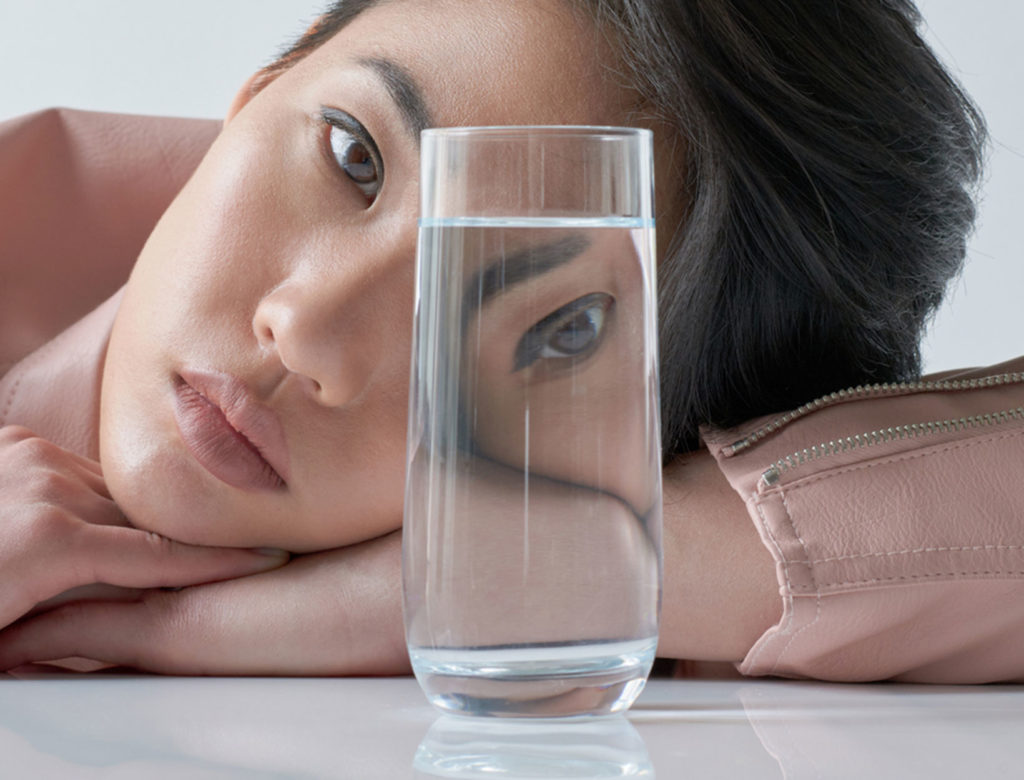
When you think of hydration, most likely you’ve heard that you have to drink eight glasses a day to stay hydrated.
But that’s not actually true.
The eight glasses a day “gold standard” of the wellness industry is a myth. This got started when the U.S. Food and Nutrition Board recommended that people drink 2.5 liters (84.5 ounces) a day. Evidently, most who read this ignored the following sentence, “Most of this quantity is contained in prepared foods.” Whatever “prepared” meant in 1945, all food contains water, especially vegetables and fruits.
There’s debate over the amount of water you get from fruits and vegetables and how this behaves differently in the body than drinking a glass of water. Still, the gist is that sometimes an apple could be a good alternative. Suppose you want to learn more about hydration. In that case, we recommend Dana Cohen’s book Quench: Beat Fatigue, Drop Weight, and Heal Your Body Through the New Science of Optimum Hydration.
Coffee, teas, soft drinks, and alcoholic drinks are indeed liquids, but paradoxically, they can dehydrate the body.
Regulations aren't enough
Regulators tell you that tap water is clean and safe to drink. Still, when you want to be conscious of your wellbeing, or you’re suffering from allergies or chronic conditions, this promise of pristine tap water just doesn’t hold up.
Municipalities do their best to treat the water from pathogens like bacteria, viruses, and parasites. Yet, this process is not perfect, and it comes at a cost. For example, chlorine is added to municipal waters as a disinfectant. Unfortunately, this process actually creates new dangerous compounds called disinfection byproducts. It’s a delicate process to find the balance between removing enough pathogens but not creating too many new harmful chemicals in your water. Both can be dangerous.
The reality is that there is a way around these, but that would make water treatment too expensive, and your utilities would skyrocket. And since only about 1% of all treated water in the U.S. ends up being used for drinking and cooking, it’s simply not worth it. Other uses include (in decreasing order) toilets, washing machines, showers, baths, faucets, and leaks.
Because of this, purifying water for drinking and cooking makes the most sense at the point of its use.
What's in your water?
- Test analysis carried out by the Environmental Working Group (EWG) found 267 contaminants coming out of the average faucet in 50 states across the U.S.
- Many of these contaminants are known as “forever chemicals,” which could take thousands of years to break down.
- EWG also suspects fluorinated chemicals (PFAS) to be discharged into the environment (and absorbed by the water sources) by various industries, mainly agriculture. You can look up your area on this map here.
- Europe is not left behind – millions of Europeans are drinking water that is contaminated, according to World Health Organization (WHO)
- Fluoride is being added into municipal waters as a public health intervention, but it’s a controversial measure at best. Fluoride is actually a toxic industrial waste byproduct. Available evidence suggests it can cause significant adverse human health problems while having only a modest dental cavities prevention effect.
When toxins become too much
A glass of tap water is safe to drink (in most countries). Your body is pretty good at detoxing itself. However, the problem is that you consume way more than just one glass of tap water in a given period, and there are lots of other harmful toxins in the modern environment.
Your body is being bombarded with harmful chemicals from conventionally grown foods, chemically loaded personal care products, harsh cleaning supplies, and general pollution. On their own, these compounds might not seem like a big deal, but you are exposed to of every single day.
These compound up to what’s called a total toxic load. And it’s when this total toxic load on your body gets too much, symptoms develop. You might be tired all the time, develop a rash, an allergy, or an acne outbreak. But the actual harm from this is oxidative stress and DNA damage, which you won’t feel for years, or even decades. These chemicals make you weaker slowly by literally making you age faster.
Daily consumption of toxic chemicals in tap water has been linked to several health conditions. These include brain damage and reduced I.Q. in children, impaired learning and memory, cardiovascular diseases, thyroid dysfunction, joint pain and stiffness, reduced bone strength and fractures, blood glucose imbalances, cancer, endocrine and hormonal disorders, and insomnia.
So what can you do?
- The most common option is a pitcher filter. These are inexpensive and convenient water purifiers, but they’re not at all practical. Studies have shown that they can only improve the taste of your water and remove only some larger particles. They’re also notorious for actually becoming a breeding ground for bacteria and microorganisms, which can end up making your water worse. So, not recommended.
- The traditional way of purifying water is boiling. However, this does not remove all toxic substances such as aluminum, cadmium, mercury, and nitrates. Boiling also changes the composition of the water. It loses some oxygen, which in turn increases the concentration of harmful substances. Boiling was the first step towards water purification historically, but it’s far from the best solution you have nowadays.
- Distillation, U.V. radiation & activated carbon are all valid water purification methods. But distillation can be a tedious, time-consuming process, and U.V. purification is a bit gimmicky and unfit to remove contaminants like heavy metals & dissolved solids.
- The most efficient water purification technology on the market is reverse osmosis. This process can remove up to 99% of all contaminants, even fluoride, chlorine, disinfection byproducts, synthetic organic chemicals, and other substances that alter your water quality.
- The most common option for home reverse osmosis filters is an under-the-sink unit. However, these need to be installed by professionals, and this often means that you have to tear up parts of your kitchen. And to be effective, these systems need to also be professionally maintained and sterilized every 6 months (which they rarely are). The last issue with these is that since the clean water tanks are pretty large, they barely ever get wholly emptied out. This can lead to excessive bacterial growth inside the tanks of already purified water.
The best solution
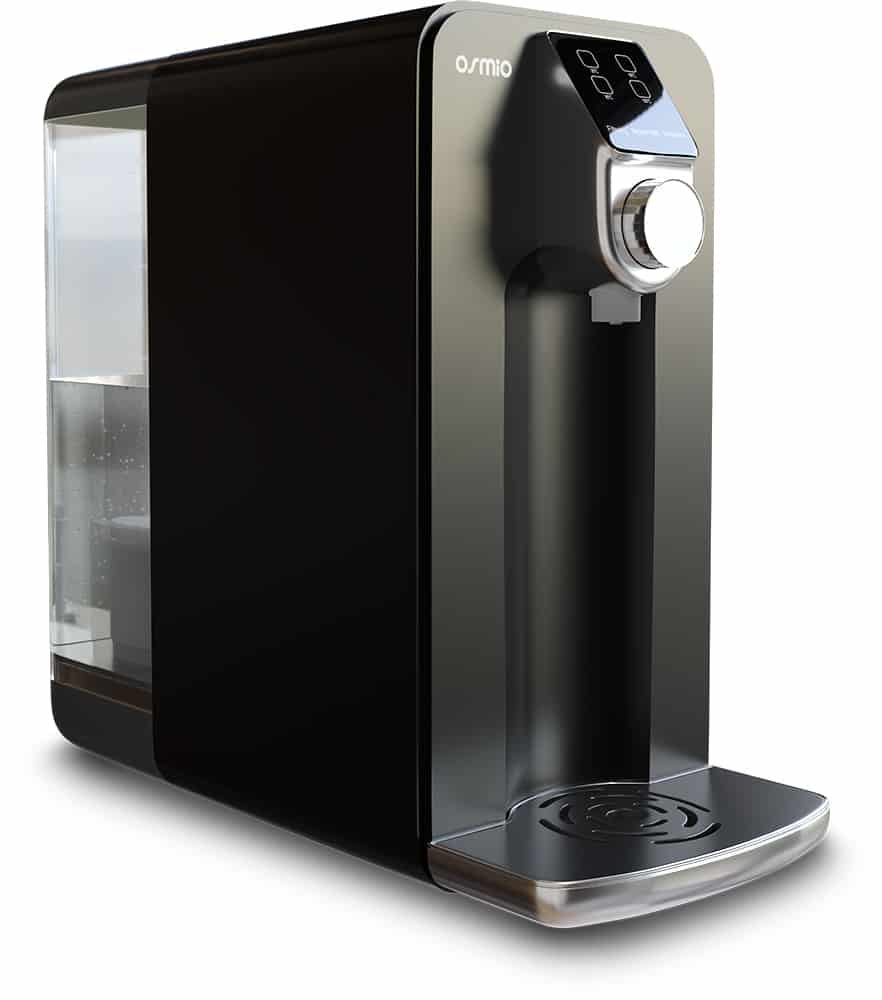
The best solution we’ve found is a countertop reverse osmosis system. It’s a relatively new twist on the original technology but without the problems of the under-the-sink systems. Better models even let you choose water temperature and instantly dispense room temperature, warm, hot, or boiling water. This is a perfect time saver for preparing tea, coffee, and baby food.
The most common argument against reverse osmosis is that since it’s so effective at water purification, it ends up also removing all the good stuff. But arguably, there’s barely any of that left after municipal water purification. And most modern reverse osmosis systems come with built-in remineralization filters that add back the minerals removed earlier in the process.
Older R.O. systems are also criticized for being wasteful. While wastewater is an unfortunate result of the reverse osmosis process, countertop units are also much more effective. Better ones result in a liter (.26 gallons) of wastewater for every 5 (1.3 gallons) liters of filtered water. The older under-the-sink type systems wasted as much or even double the amount of water for every gallon of water they purified.
What about bottled water?
While buying bottled water can be more expensive than a water purifier in the long term, it’s fine as long as you buy water in glass bottles. Actually, when you think about it, 6-months worth of bottled water adds up to a countertop reverse osmosis unit that will last you years. All without the added plastic waste and perfluoroalkyl chemicals (PFAs) that leech into your water from the plastic bottles themselves.
So when you’re looking to purify your drinking water, a countertop reverse osmosis unit is the way to go. But when you’re on a budget, an affordable option for you could be a an activated carbon filter which mounts on your kitchen faucet, which will do up to 80% of the job.
The bottom line is, your home is your sanctuary, and your body is your temple. So whether it’s just you or with family, friends, and pets, you have the right to clean, toxin-free water.
