
Most people think that their indoor air quality is good when it is actually often worse than the air outside. So, if you are wondering how you can improve your indoor air quality, here are some tips for you.
Every function in your body, from digestion, muscle movement or even just thinking, needs oxygen.
Proper breathing can enhance the quality of living. The recent popularity of different breathwork methods can be a testament to that.
Picture this for a moment. You’re standing in a misty field. The rising sun’s rays gently fall on your skin as fresh morning air enters your lungs. You feel refreshed, energized, and awake.
Did this visualization make you feel better and crave some fresh air?
The great outdoors
There’s a reason it’s called “the great outdoors” – going outdoors is genuinely great and something that everyone should do as often as possible.
But, we tend to do quite the opposite. According to the Environmental Protection Agency, an average American spends 93% of their life indoors.
That means that less than 12 hours per week are spent outdoors. In early 2020, this number was fundamentally affected by the global crisis.
People started setting up home offices with new tables, chairs, and a carpet to make the space cozy. And during time off, we stayed indoors, sleeping, reading a book, or binging on Netflix.
So, why is that a problem?
Indoor air pollution
One of the most damaging air pollutants in any home are Volatile Organic Compounds (VOCs), such as formaldehyde. The EPA has a list of common sources of VOCs, and they can make indoor air two to five times more polluted than the air outside of your front door.
We’re all exposed to some amount of indoor air pollution, and it likely isn’t causing any real issues. However, the higher the concentration becomes, health issues will arise sooner or later. The most affected are those with allergies.
Suppose you are one of the 50 million Americans who already have allergies. In that case, you know that just walking into a room can feel like torture.
There are some obvious symptoms of an allergic reaction:
- Sneezing
- Itching
- Watery eyes
- Wheezing
- Coughing
They are all bodily attempts to remove the substances that are irritating or toxic.
Other symptoms resulting from the systemic inflammation that allergens trigger might be less self-evident:
- Diarrhea
- Fatigue
- Weight gain
- Joint and muscle pain
- Heartburn
- Brain fog
- Mood disorders
Every room is different
Your house might seem like one unit. However, while air circulation distributes the allergens all over the place, the type and amounts of allergens will differ from room to room.
For example, bedrooms and living rooms with carpeting and upholstery tend to be the spot for dust mites. Kitchens and dining areas might have more food and cockroach allergens. If you have pets, the space where they spend most time will have the most pet allergens. And last but not least, bathrooms, damp basement, and areas with water leaks are prone to be breeding grounds for molds.
Air purifying plants
In the late ’80s, NASA released a series of studies, stating that indoor plants can potentially purify the air. However, the studies were done under particular conditions. Research now shows that for a 1,500-square-foot home, you’d need to have 680 plants to have a real chance to fight toxins circulating in the air. That’s a jungle-worth of plants.
But we recommended plants in the Whomesome’s Ultimate Guide to Non-Toxic Homecare? Well, yes.
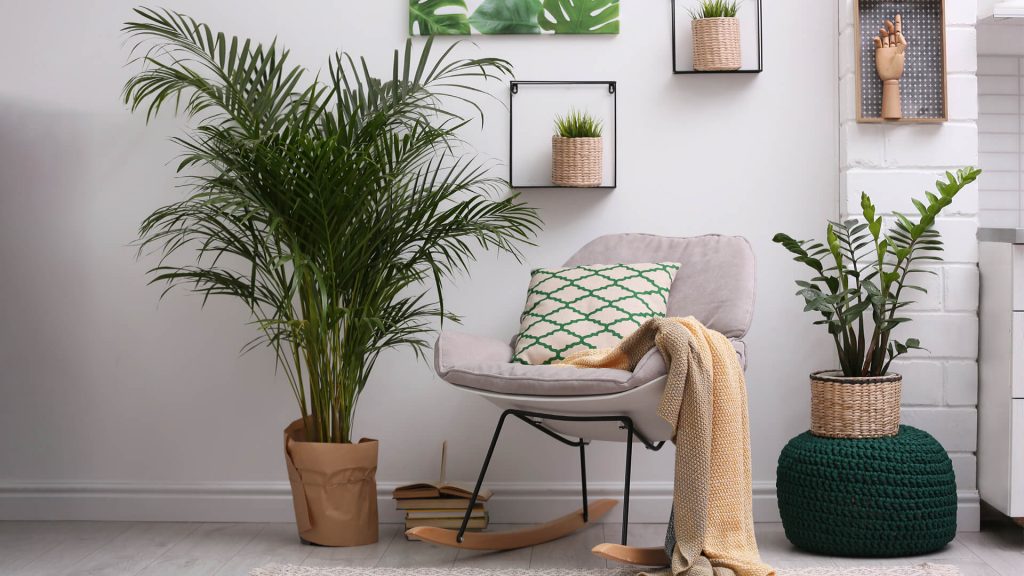
Indoor plants still have other air quality and health benefits because they reduce CO2 levels and increase relative humidity. In other words, they help to move the air and act as natural humidifiers.
More humid air could help reduce eye, ear, nose, and throat irritation for more sensitive people. Some plants are said to even extract formaldehyde and particular flame retardant from the air to some extent. And we take every little bit of help. If nothing else, plants will brighten up your living space and your mood.
Some plants can be pretty pricey. We suggest buying plants that can make little plant babies. Our favorites are the spider plant, rubber tree (ficus), and snake plant (mother-in-law’s tongue). All three are super easy to take care of, and if you wait a month or two, you will most likely have new offspring ready to be repotted.
Ferns are also fairly potent air purifiers but may require a bit more skill to transplant. But that’s why youtube was invented, right?
Air purifiers
The most effective way to keep your air at home clean is to invest in a high-quality air filter with a HEPA (high-efficiency particulate) filtration system.
Many allergy sufferers who started using these filters will vouch for how essential they are. HEPA filters help decrease the pollen that has come in from the outside, animal dander, mold spores, dust mites, smoke, odors, and any airborne particles with a size of 0.3 microns or above.
It is essential to mention that they do not prevent mold from growing, so it’s necessary to take care of the source of mold.
Nevertheless, finding the right filter for you and your home can be a little intimidating. With so many choices on the market, what should you look for?
How to choose the right one?
Choosing an air purifier is a tricky business. Before you pick one out, you have to take a couple of things into consideration.
Is the air purifier you’re interested in a true HEPA filter?
Avoid cutting corners by going for “HEPA-like” or “HEPA-type” filters, as these are just marketing ploys of companies to get consumers to purchase the product.
Can the room you want to put the air purifier in be isolated from other rooms by closing doors?
If the room you want to place the air purifier in can not be isolated, you will probably need a bigger or multiple air purifiers.
There’s a whole process on the Clean Air Delivery Rate website, where they teach you to calculate the best options for your home. They also have a CADR rating, so you can actually skip all the math and look for a CADR 300 (& above) and H13 True Hepa Air Purifier.
Just remember, no plants or air purifiers are a magic solution for everything. They help, but it is ultimately up to you to keep your place toxin-free.
So air your house often when it’s safe to do so, vacuum frequently, change air filters, get rid of the items in your home you suspect to be toxic and spend time in nature.
Your lungs and your health will thank you.
